
If you’ve been experiencing persistent respiratory symptoms or have received an abnormal chest scan result, your provider may recommend a bronchoscopy to determine what’s happening in your airways. At Gwinnett Pulmonary & Sleep, our board-certified pulmonologists perform bronchoscopy as part of a comprehensive approach to evaluating and diagnosing lung conditions.
Bronchoscopy is a well-established, minimally invasive procedure that allows our team to examine your airways directly, collect tissue samples, and gather the information needed to guide your care, all without major surgery.
Schedule a Bronchoscopy Consultation
What Is a Bronchoscopy?
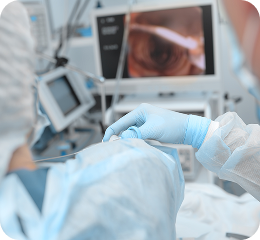
Bronchoscopy is a diagnostic procedure in which a thin, flexible tube called a bronchoscope is gently guided through your nose or mouth, down your throat, and into your airways and lungs. The bronchoscope has a small camera at its tip that transmits live images to a screen, giving your pulmonologist a clear, direct view of your trachea, bronchi, and surrounding structures.
Through the bronchoscope, your physician can also pass small instruments to collect tissue samples, remove blockages, or clear secretions when needed.
Bronchoscopy is different from robotic navigational bronchoscopy, which uses an advanced robotic platform to reach small or deeply located lung nodules with greater precision. Standard bronchoscopy is used to evaluate the airways themselves and accessible lung tissue, making it the appropriate choice for a wide range of diagnostic and clinical situations.
Why Is Bronchoscopy Performed?
Your pulmonologist may recommend a bronchoscopy if you have symptoms or imaging findings that require direct evaluation of your airways or lung tissue.
Investigating Persistent Respiratory Symptoms
Bronchoscopy is commonly used when patients experience:
- A chronic cough that has not resolved with standard treatment
- Unexplained shortness of breath
- Coughing up blood (hemoptysis)
- Recurrent respiratory infections
- Unexplained wheezing
Evaluating Abnormal Imaging Findings
If a chest X-ray or CT scan reveals a mass, area of consolidation, or other abnormality, bronchoscopy allows your physician to directly examine the area and obtain tissue for analysis.
Diagnosing Lung Infections
Bronchoscopy is used to collect samples from the airways and lung tissue to identify bacterial, fungal, or opportunistic infections, particularly in patients who have not responded to initial treatment or who are immunocompromised.
Diagnosing and Evaluating Lung Cancer
When there is concern for lung cancer, bronchoscopy allows our Gwinnett County pulmonologists to directly visualize suspicious areas within the airways and obtain biopsies for laboratory analysis. It is an important tool in the initial evaluation and diagnosis of centrally located lung tumors, as the bronchoscope can directly reach the affected tissue.
For nodules located deeper in the lung, away from the central airways, robotic navigational bronchoscopy or endobronchial ultrasound (EBUS) may be more appropriate options.
Removing Airway Obstructions
In some cases, bronchoscopy is used therapeutically to remove mucus plugs, foreign objects, or other material that blocks the airways and impairs breathing.
Who May Need a Bronchoscopy?
Your pulmonologist may recommend bronchoscopy if you have symptoms or imaging findings that require a closer look at your airways or lung tissue. Common reasons for referral include:
A persistent or unexplained cough. If a chronic cough has not responded to treatment and the cause remains unclear, bronchoscopy allows your physician to examine the airways directly and rule out underlying conditions.
Coughing up blood. Hemoptysis warrants prompt evaluation. Bronchoscopy helps identify the source and determine whether further treatment is needed.
Abnormal findings on a chest X-ray or CT scan. If imaging has revealed a mass, area of consolidation, or other abnormality within or near the airways, bronchoscopy can provide direct visualization and tissue sampling.
Suspected or confirmed lung cancer. For tumors located in or near the central airways, bronchoscopy is a key diagnostic tool, allowing your physician to visually assess the area and collect biopsies without open surgery.
A lung nodule requiring evaluation. When a nodule is located within reach of the airways, bronchoscopy may be used to obtain a tissue sample.
Recurrent or treatment-resistant lung infections. Bronchoscopy can collect samples directly from the affected area to identify the specific organism causing infection and guide targeted treatment.
We understand that being told you may need a bronchoscopy can feel stressful, especially after an abnormal CT scan or ongoing respiratory symptoms. Our team takes time to explain every step clearly so you feel informed and supported throughout the process.
Speak With a Pulmonary Specialist
What to Expect Before the Procedure
Our team will walk you through everything ahead of your appointment. Your provider will review your medications and medical history, provide fasting instructions, and advise you on whether to pause blood thinners or other medications. Arrange for someone to drive you home, and plan to rest for the remainder of the day.
What Happens During a Bronchoscopy?
You will receive sedation or anesthesia before the procedure begins, so you will not feel pain. Our bronchoscopy specialist will then guide the bronchoscope through your nose or mouth and into your airways, using a small camera to examine your trachea, bronchi, and lung segments in real time. If an area requires further evaluation, small instruments are passed through the scope to collect tissue samples, fluid, or secretions for laboratory analysis. The procedure typically takes between 30 and 60 minutes.
What to Expect After the Procedure
Most patients go home the same day once sedation has worn off. Mild throat soreness, a temporary cough, and fatigue are normal and typically resolve within 24 to 48 hours. Your care team will provide discharge instructions and follow up with results within a few days.
Contact your provider right away if you experience severe chest pain, significant shortness of breath, fever, or persistent bleeding.
Is Bronchoscopy Safe?
Yes. Bronchoscopy is a well-established and widely performed procedure. Serious complications are uncommon when the procedure is performed by experienced pulmonologists.
Potential risks, though rare, may include:
- Minor bleeding at the biopsy site
- Temporary low oxygen levels
- Infection
- Lung collapse (pneumothorax)
At Gwinnett Pulmonary & Sleep, patient safety guides every step of your care. Our physicians evaluate each patient individually to confirm that bronchoscopy is the appropriate and safest diagnostic approach for your situation.
Talk with a Bronchoscopy Specialist
Why Choose Gwinnett Pulmonary & Sleep?
Experienced Pulmonary Specialists
Our board-certified pulmonologists are experienced in performing bronchoscopy and a full range of advanced pulmonary diagnostic procedures. When standard bronchoscopy is not the right fit, we have the expertise and technology to recommend the most appropriate alternative.
Comprehensive Diagnostic Capabilities
We offer a full spectrum of airway and lung evaluation services so your care can move forward without unnecessary referrals or delays.
Patient-Centered Care
We understand that having a procedure on your lungs can feel overwhelming. Our team is committed to:
- Clear communication at every step
- Compassionate, unhurried care
- Thorough follow-up after your procedure
- Personalized planning based on your results
Gwinnett Pulmonary & Sleep has been serving patients throughout Gwinnett County and the greater Atlanta area since 1983. With five convenient office locations, expert pulmonary care is always near you.
Schedule Your Bronchoscopy in Gwinnett County
If you’ve been referred for bronchoscopy or want to discuss whether this procedure is right for your symptoms, our team is here to help. At Gwinnett Pulmonary & Sleep, we combine clinical expertise with compassionate care to give you the clearest possible picture of your lung health.
Call our office today to schedule an appointment or request a consultation online with one of our bronchoscopy specialists in Gwinnett.
Frequently Asked Questions
Is bronchoscopy painful?
No. Bronchoscopy is performed under sedation or anesthesia, so you will not feel pain during the procedure. You may notice mild throat soreness, hoarseness, or a temporary cough afterward, but these effects are normal and typically resolve within 24 to 48 hours.
Can bronchoscopy detect lung cancer?
Yes. Bronchoscopy is an important diagnostic tool when lung cancer is suspected, particularly for tumors located in or near the central airways. Your pulmonologist can directly visualize abnormal tissue and collect biopsies for laboratory analysis.
What does a bronchoscopy test for?
Bronchoscopy is used to investigate a wide range of airway and lung conditions, including chronic cough, hemoptysis, unexplained shortness of breath, lung infections, airway obstruction, lung nodules, and suspected lung cancer.
How long is the recovery after a bronchoscopy?
Most patients go home the same day and resume normal activities within 24 to 48 hours. You will need someone to drive you home due to the effects of sedation, and your care team will advise you to rest for the remainder of the day.
What are the risks of bronchoscopy?
Bronchoscopy is a well-established procedure, and serious complications are uncommon. Potential risks, though rare, include minor bleeding at the biopsy site, temporary low oxygen levels, infection, and, in rare cases, lung collapse (pneumothorax). Our team carefully evaluates each patient beforehand to confirm that bronchoscopy is the safest and most appropriate approach for your situation.
Do I need anesthesia for bronchoscopy?
Most patients receive sedation or anesthesia to ensure comfort throughout the procedure. The type and level of sedation will depend on your individual case and will be discussed with you in advance.
How is bronchoscopy different from robotic navigational bronchoscopy?
Standard bronchoscopy examines the airways and accessible lung tissue using a flexible scope guided by your physician. Robotic navigational bronchoscopy uses an advanced robotic platform and 3D imaging to navigate to small or deeply located lung nodules that a standard bronchoscope cannot reliably reach. Your pulmonologist will recommend the most appropriate approach based on your specific findings.
Can I drive after a bronchoscopy?
No. Because bronchoscopy is performed under sedation, you will not be able to drive yourself home. You must arrange for a responsible adult to drive you and remain with you for a period of time afterward.
What should I avoid after a bronchoscopy?
For the remainder of the day following your procedure, you should avoid driving, alcohol, and any activities that require concentration or physical exertion. Your care team will provide specific discharge instructions based on your case, including guidance on when you can eat, drink, and return to your normal routine. If you had a biopsy, you may be advised to monitor for any signs of bleeding or breathing changes and contact the office if concerns arise.
When will I get my results?
Biopsy and laboratory results are generally available within a few days. Your pulmonologist will review the findings with you and discuss the appropriate next steps based on the results.
How much does a bronchoscopy cost?
The cost of bronchoscopy varies depending on your insurance coverage, the facility where the procedure is performed, and the complexity of your case. Our team can assist with insurance verification and help answer any billing questions before your procedure.